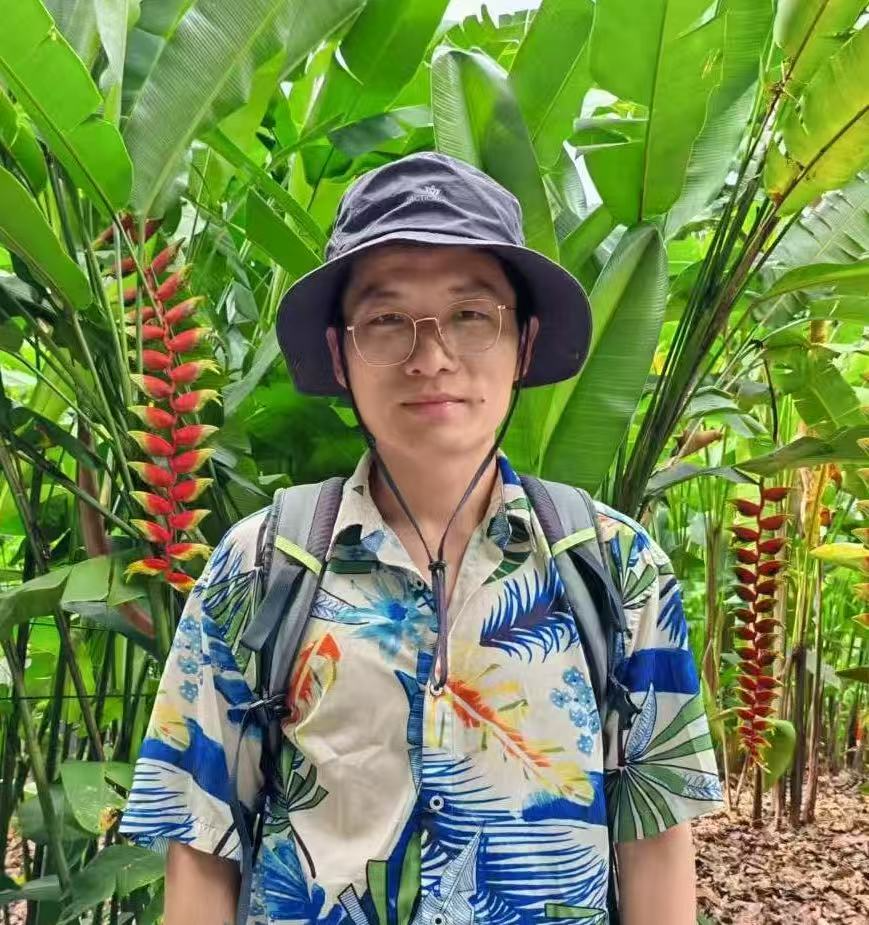
Kevin Tian
I build production AI systems around LLMs, multimodal foundation models, and generative vision.
I am a Senior Machine Learning Engineer at ByteDance/TikTok Singapore, building LLM post-training, agentic/RAG, and production AI systems for search. My career path connects multimodal foundation models at Meta, generative and 3D vision in applied research/startup settings, and LLM-driven search understanding at TikTok. I focus on turning model development into production impact through post-training, retrieval, verification, planning, serving, caching, and evaluation. I also publish under the name Mu Tian (Tian, Mu, Tian, M.) in academic papers.
Focus Areas
LLM Post-training & Agentic Search
At TikTok, I build resource-efficient LLM/SLM systems for search understanding. I used a unified compact model for NER, query rewriting, POI recognition, structured parsing, LLM-as-a-judge verification, and agent-style planning. Through SFT/LoRA and reinforcement learning–based post-training, including PPO-style RLHF and DPO-style preference optimization, the system improved structured understanding quality while controlling latency and serving cost. I also helped design a nearline Kafka-to-cache architecture with cache-oriented query canonicalization, substantially improving cache coverage and reducing online model-serving pressure. For details, check Resource-efficient LLM system for local-service search.
Multimodal Foundation Models
At Meta, I worked on multimodal foundation-model pretraining for video, audio, and text understanding. My work covered video-transformer and audio-transformer modeling for downstream applications such as harmful video detection, content integrity, video understanding, and ASR/audio transcription.
I also helped bridge the research-to-production gap during Meta’s early transition from Caffe2-heavy deployment workflows to PyTorch/TorchScript-based serving. By using PyTorch JIT/TorchScript to make research models more directly deployable, I reduced the engineering overhead of rewriting or translating models for production inference and enabled faster iteration from model development to online evaluation.
Generative AI & 3D Vision
After Meta, I worked on applied research and startup-oriented AI for generative and 3D medical vision. I focused on diffusion-based data and annotation synthesis to address limited-label settings, using generative models to expand scarce training data and improve downstream segmentation robustness. I also developed interactive and online-learning segmentation systems that reduced expert annotation cost and made 3D medical AI more adaptable to real-world clinical workflows.
For details, see Projects, Papers, and Blog.